How to Use OPNBar Tool – Version 1
Contents
Safety Precautions
If your OPNBar was not purchased from an approved distributor or seller, we are unable to ensure reliability and safety. It is advised to only purchase from an approved distributor or seller as found on our contact us page. For questions about approved sellers, you can contact us.
Always use safety precautions in the workplace. This tool is a manual tool, so caution must still be taken when opening or closing doors. For aging OPNBars, please always inspect your tool that there are no compromised or broken parts of the tool. If you notice such issues, please discontinue use. Please watch this safety video as part of our instructions prior to using OPNBar.
The intention of this tool is mainly to provide leverage and to prevent unconventional methods of opening/closing container doors which often result in strains and sprains. Use quality gloves with grip when using OPNBar. Use a shipping container strap and wrap around lockrods to prevent items that may have shifted from falling out. Use caution using OPNBar for opening and closing shipping container door, and use of force is not recommended as this can bend shipping container door handles. If using OPNBar as a 5th Wheel Release hook, if hook does not fit over the 5th wheel release hook, discontinue use and find a proper 5th wheel hook that does. Our Version 2 tool may be a better alternative. As a tire thumper, while tire thumping is a quick way to check for flat tires, you must always check with a tire gauge if you suspect that a tire is low on air. While some customers also use OPNBar as an alternative tool for various uses, always use caution.
Using product other than it’s intended function may result in injury and is at your own risk.
Please also refer to our Company Disclaimer.
Life Expectancy of Tool
For aging OPNBars, please always inspect your tool that there are no compromised or broken parts of the tool. If you notice such issues, please discontinue use. If any parts of the tool show cracks, deterioration, or wear and tear, the integrity of the tool could be compromised.
Lanyard
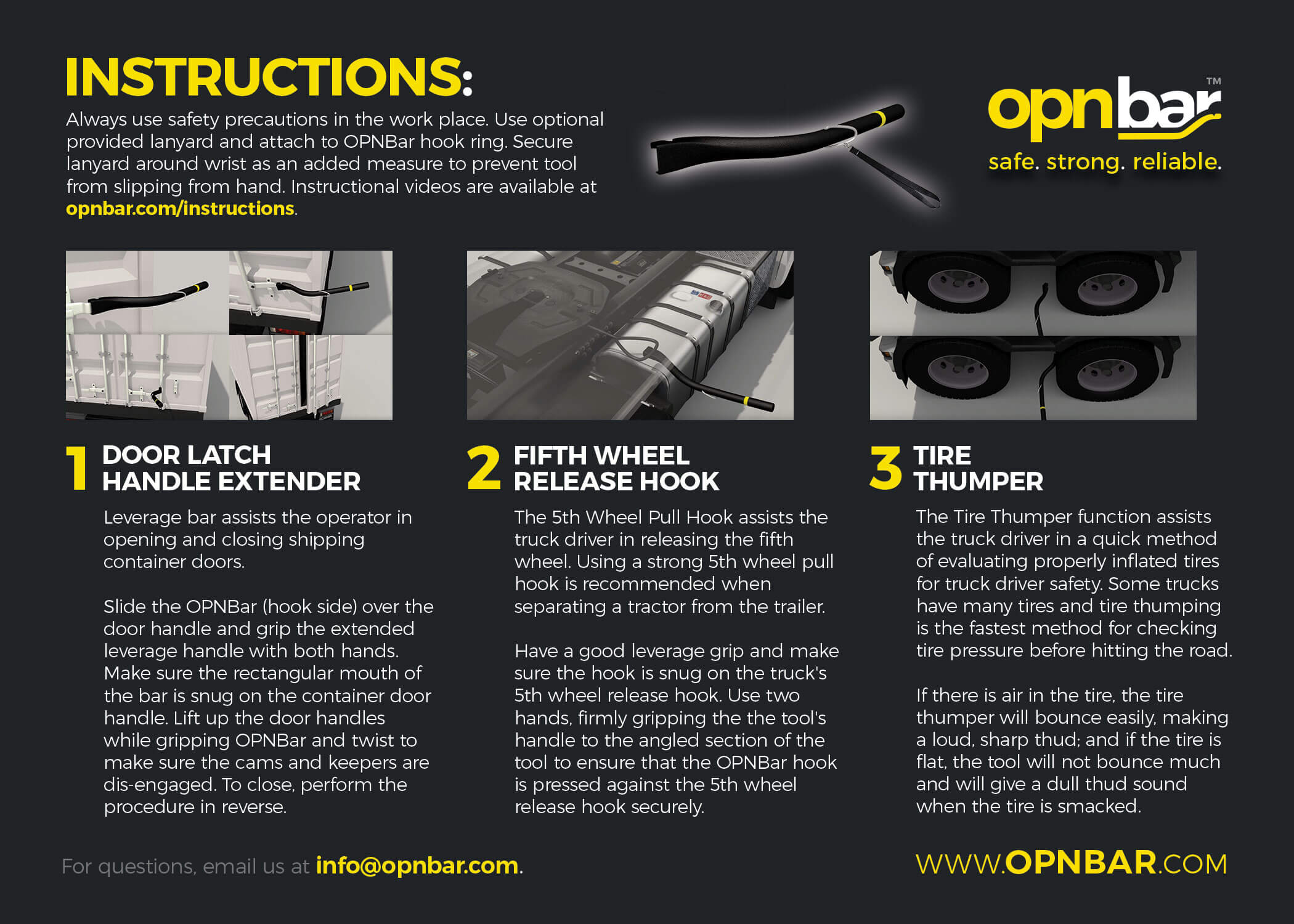
Use the optional provided lanyard and attach to OPNBar hook ring. There are two options for attaching your lanyard (see video). Some tools have a thicker ring and may require you to tie your lanyard with knot as seen in the video below. If your bar did not come with a lanyard, or your need a replacement, please register your tool here.
Leverage Bar
PRECAUTION: Use optional provided lanyard and attach to OPNBar hook ring. Secure lanyard around wrist as an added measure to prevent tool from slipping from hand. Use recommended quality gloves with grip when using OPNBar. Use a shipping container strap and wrap around lockrods to prevent items that may have shifted from falling out. Use caution using OPNBar for opening and closing shipping container door, and use of force is not recommended as this can bend shipping container door handles.

Note: If you encounter issues with the bend of our tool, please contact us for our new bend replacement


Opening
The right hand door is the first door you open, swivel the custom catches up, there’s one on each handle.
You’ll notice that your container is fitted with lock rods which run all the way from the bottom of the doors through to the top. At each end of the lock rod is a cam and a keeper which engage to allow the door to lock.
Slide the OPNBar (hook side) over the door handle completely and grip the extended leverage handle with both hands.
When using leverage bar, make sure the rectangular mouth of the bar is snug on the container door handle. For best results firmly insert OPNBar and apply forward pressure when operating. OPNBar should be tight and should not wobble. Failure to do so can result in the tool, or the operator to slip resulting in injury. The tool must be operated by using 2 hands with a firm grip at all times to reduce the risk of injury; when using the tool the operator must have both feet planted firmly on the ground while wearing dry work gloves with the safety strap so the tool will not slip out of one’s hand.


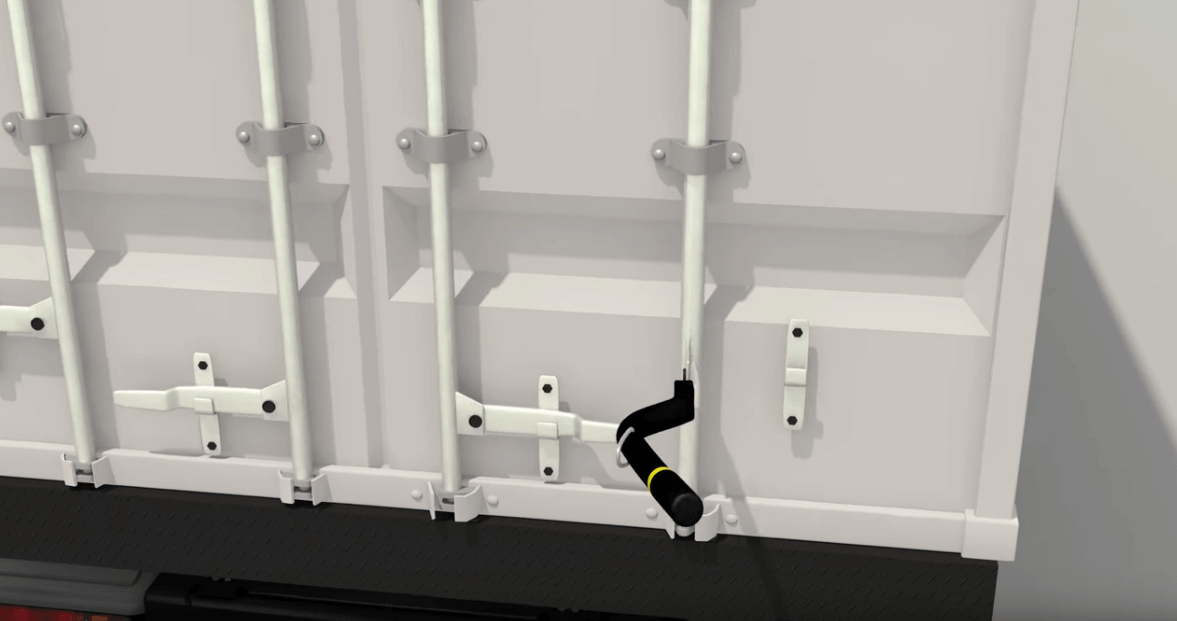
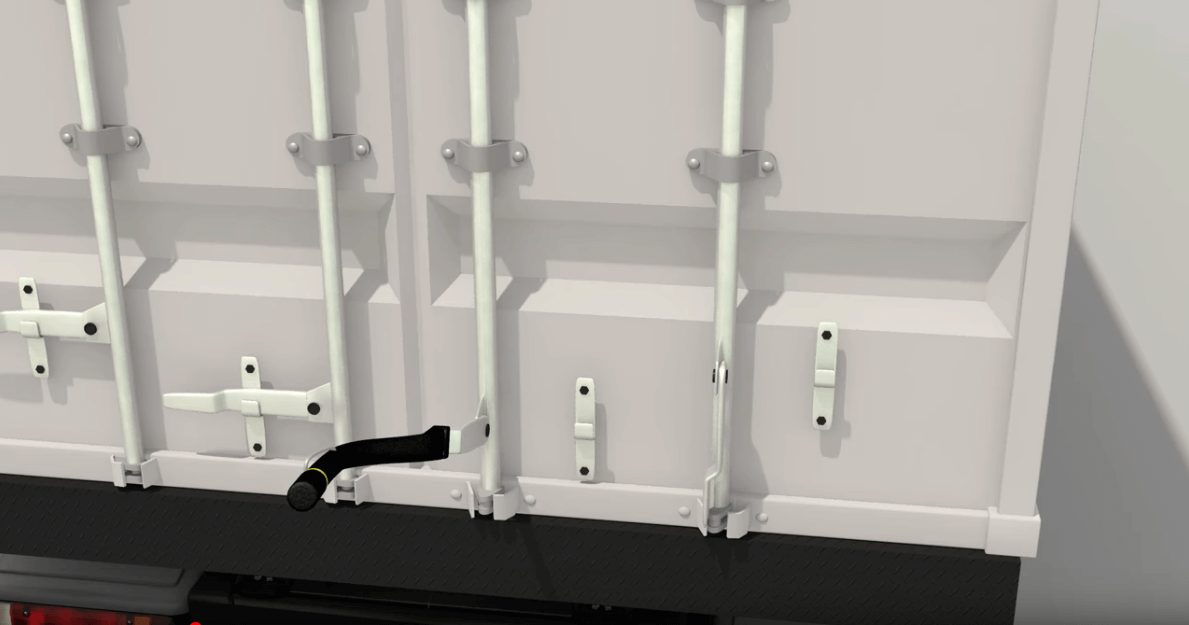
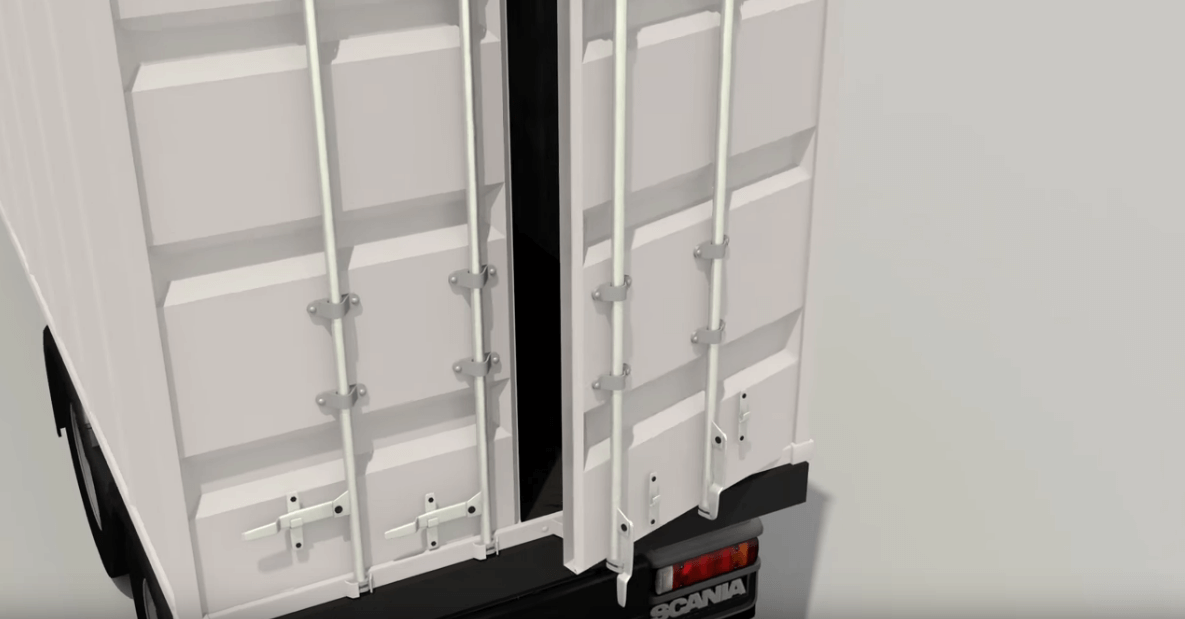
Lift up the door handles while gripping OPNBar and twist slightly to make sure the cams and keepers are dis-engaged.
Next take hold of the inner door handle first and pull out slightly followed by the outer handle and then pull them in tandem.
For more information, click here
Closing
Closing the doors is just a reverse process of course, start with the left hand door, engage the cams and keepers and then twist both door handles. Slide the OPNBar (hook side) over the door handle to provide leverage.
When using leverage bar, make sure the rectangular mouth of the bar is snug on the container door handle. For best result we recommend firmly inserting opnbar and applying forward pressure when operating. Bar should be tight and should not wobble. Failure to do so can result in the tool, or the operator to slip resulting in injury. It is recommended that the tool be operated by using two hands with a firm grip at all times to reduce the risk of potential injury.
Finally swivel the custom down.
For more information, click here
5th wheel release hook
PRECAUTION: Operator must have a good leverage grip and should make sure hook is snug on the 5th wheel release hook. Use two hands, firmly gripping the hook from handle to the angled section of the tool to ensure that the OPNBar hook is secure and pressed against the 5th wheel release hook securely. Failing to do so could cause the operator to fly back and result in injury. If hook does not fit over the 5th wheel release hook, discontinue use and find a proper 5th wheel hook that does. Our Version 2 tool may be a better alternative.
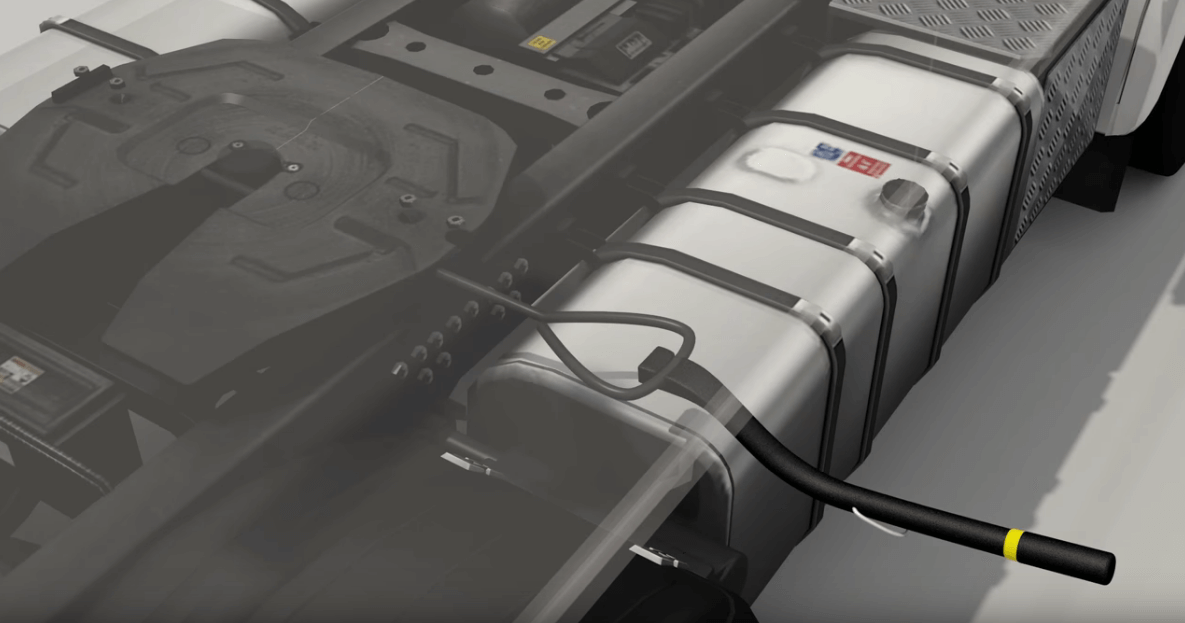
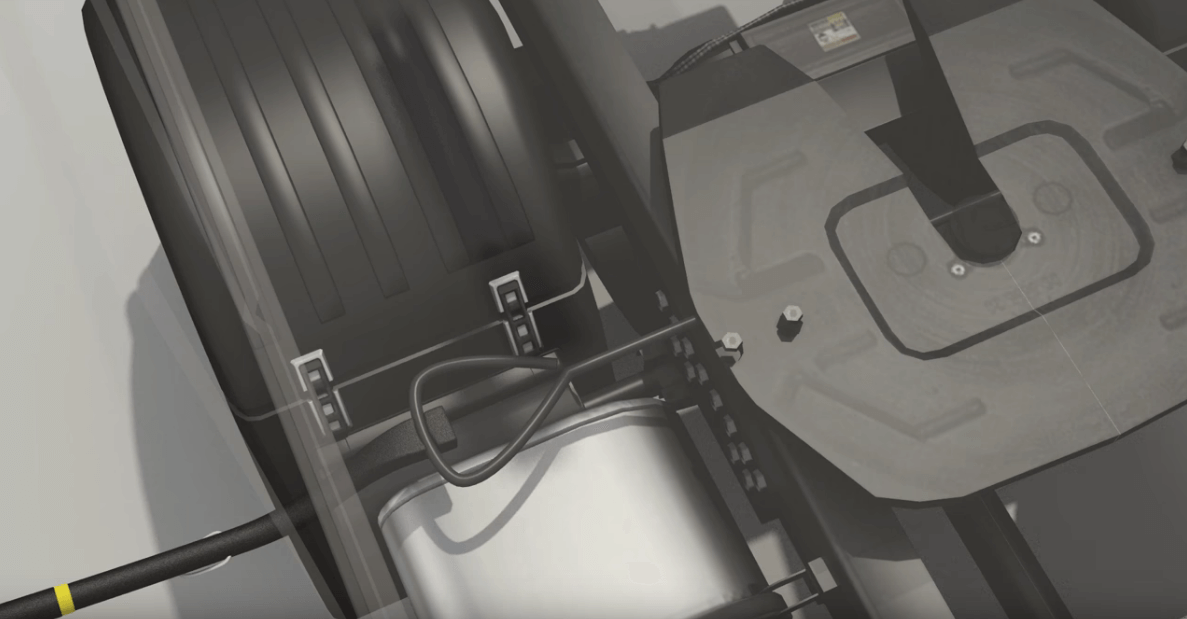

The fifth wheel coupling provides the link between a semi-trailer and the towing truck, tractor unit, leading trailer or dolly. Some recreational vehicles use a fifth wheel configuration, requiring the coupling to be installed in the bed of a pickup truck as a towing vehicle.
Using a strong 5th wheel pull hook is recommended when separating a tractor from the trailer. Soft-metal hooks (such as those made from aluminum) are unsafe as they are too susceptible to bending.
Reaching under the trailer to release the fifth wheel can cause neck, shoulder and back injury, as well as, damaging your clothes with grease, oil, and road grime. Our 5th Wheel Release Hook can help eliminate these problems.
When using a hook to pull a fifth-wheel release, get a wide foot stance, with your rear foot parallel with the trailer. Such a stance will help you maintain your stability if the hook slips off of the fifth-wheel release handle.
For more information, click here
Tire Thumper
While tire thumping is a quick way to check for flat tires, you must always check with a tire gauge if you suspect that a tire is low on air. The apparatus must be used as a tool to detect changes in sound when thumping tires to quickly point out if there is an issue with a tire. Use quality gloves with grip when using OPNBar.


A quick and easy way to check tire pressure is by thumping your tires. Some trucks have many tires and tire thumping is the fastest method for checking tire pressure before hitting the road.
Since duel tires ride side by side, one tire can be flat and still on the wheel or rim and will not appear flat since the tire right next to it will hold it off the ground.
Tire Thumper assists the truck driver and operator in a quick method of evaluating properly inflated tires.
If there is air in the tire, the tire thumper will bounce easily and make a loud, sharp thud; and if the tire is flat (no air) it will not bounce much and will give a sound like a dull thud when it is smacked.
For more information, click here
Container Seal Breaker
OPNBar also acts as a Shipping Container Seal Breaker, for plastic and metal, which can eliminate the need for wire cutters when on the go.
Cam Pin Compressor
OPNBar also acts as a Shipping Container or Trailer Cam Pin Compressor, for misaligned cams and keepers. Placing OPNBar underneath the cam can give leverage to align the cam with the keeper.
T Handle Toolbox Latch Tool
OPNBar also acts as a T Handle toolbox latch tool for stuck latches. The groove in the OPNBar tool can fit over T Handle toolbox headache rack latches when difficult to turn them.
This product should be stowed in a secure area, away from children and should not be exposed to excess heat or frigidity which may affect the durability of the product.
Additional Precautions
- When using the tool the operator must have both feet firmly planted on a level surface at all times.
- We recommend that before the tool is used, the operator wears clean, dry, “work gloves” free of any dirt or grease or any other substance to avoid slippage from the operator's hands.
- When not is use, product must be stowed away in a secure area
- Avoid exposing the tool to heat or frigid conditions for long periods of time as this may affect the durability of the product when in use
- Ensure tools properly seated before use to avoid injury
- Safety strap can be used reduce the likelihood of tool slipping out of hand
- Use quality gloves with grip when using OPNBar.
More Precautions
Taking precautions when opening and closing shipping container doors is crucial to ensure both personal safety and the integrity of the cargo. Here's a unique and unplagiarized version of the precautions to follow:
- Assess Surroundings: Begin by surveying the area around the container. Look for any potential hazards, uneven ground, or obstacles that might hinder the smooth operation of the doors or pose a safety risk.
- Protective Gear: Prioritize safety by donning appropriate personal protective equipment (PPE), such as sturdy gloves and durable footwear. These safeguards shield your hands and feet from potential sharp edges or unexpected movements.
- Inspect Locks and Seals: Before attempting to open the container doors, double-check that all locks, seals, and security measures are fully disengaged. Failing to do so might lead to unnecessary strain on the doors or compromise your safety.
- Use Correct Tools: If the doors are secured with locks, make use of the correct tools for their removal. Avoid resorting to makeshift tools or excessive force, as this could result in accidents or damage.
- Firm Footing: Maintain a stable footing while operating the doors. Refrain from climbing on the container or using unstable objects to gain height, as this can lead to dangerous falls.
- Mindful Effort: If the doors prove resistant to opening, refrain from exerting excessive force. Straining muscles or causing sudden door movements can result in injury. If necessary, seek assistance.
- Handle with Care: When operating the doors, ensure you have a secure grip on the handles or edges. Abrupt door movement due to a loose grip can lead to unforeseen accidents.
- Watch for Falling Objects: As the doors are opened, be vigilant for any items that may have shifted during transit and could tumble out when the doors are ajar.
- Controlled Action: Both opening and closing the doors should be executed smoothly and steadily. Prevent rapid swinging or forceful closure, as these actions can lead to accidents or damage.
- Avoid Pinching: Be particularly cautious of pinch points where the doors meet the container frame. Steer clear of these areas to prevent potential injuries.
- Clear the Path: Before closing the doors, ensure that no objects or body parts are obstructing the path. Hasty door closure with obstructions in the way can result in harm.
- Secure Closure: After opening or closing the doors, verify that they are properly secured and latched. Loose doors can unexpectedly swing shut, posing a risk to those in proximity.
- Open Communication: When collaborating with a team, maintain clear communication regarding your actions and intentions while manipulating the container doors.
- Regular Maintenance: Ensure that the hinges, locks, and other components of the container are routinely inspected and adequately lubricated. This practice prevents operational glitches.
- Seek Expertise: If you're unfamiliar with container door operations, seek guidance or training from experienced professionals before attempting to manipulate them.