Shipping Container Door Hard to Open? Here’s What to Do
If your shipping container door is hard to open, pulling harder isn’t necessarily the answer.
A container that opened normally yesterday can suddenly become difficult because of rust, corrosion, seized hinges, misaligned locking rods, a compressed door gasket, uneven ground, frame distortion, freezing conditions, or cargo pressing against the doors. Containers endure lifting, stacking, transportation, weather and heavy use, so even a relatively small change in alignment can make the door mechanism considerably harder to operate.
Before reaching for a pipe or trying to muscle the door open, figure out why it’s resisting you.
Here are the most common causes, and what you can do about them.
Why Is My Shipping Container Door So Hard to Open?
Shipping container doors aren’t ordinary doors.
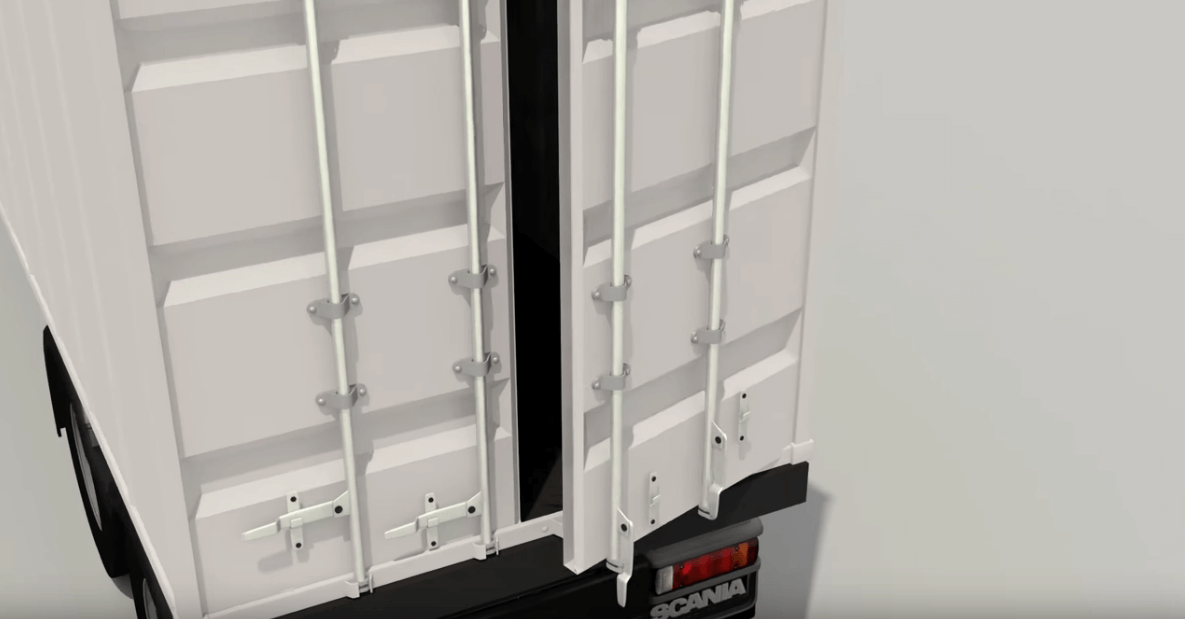
The locking rods run vertically along the doors, with cams engaging keepers at the top and bottom. Multiple hinges also need to remain properly aligned for the door to move freely. When any part of that system binds, the amount of effort required at the handle can increase dramatically.
1. Rust and Corrosion
This is one of the first things to check.
Containers spend their lives exposed to rain, humidity, salt air and changing temperatures. Corrosion around the hinges, locking rods, cams and keepers can increase resistance and eventually make the mechanism difficult to operate.

Look for:
Rust around hinge pins
Corrosion on locking hardware
Lock rods that don’t rotate smoothly
Cams that appear to bind in their keepers
If the problem is corrosion or seized hardware, maintenance may be necessary rather than simply applying more force.
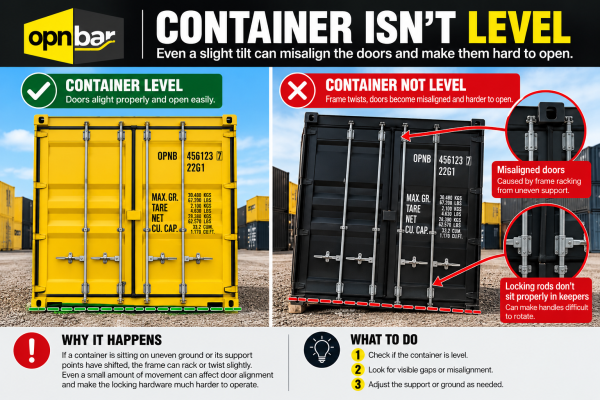
2. The Container Isn’t Level
This one surprises a lot of people.
A shipping container is a large steel structure. If it’s sitting on uneven ground or its support points have shifted, the frame can rack or twist slightly.
It doesn’t take much movement across a 20- or 40-foot container to affect door alignment.
The result?
The doors suddenly become difficult to open or close even though nothing appears obviously broken.
Uneven support and frame racking are frequently cited causes of difficult container doors.
If a container that used to open easily suddenly doesn’t, check the container’s position and door-frame alignment before assuming the door hardware has failed.
3. Locking Rods or Cams Aren’t Releasing Properly
The long vertical bars on the doors are locking rods.
At their ends are cams that engage with keepers to secure the door.
If the rods are bent, corroded or out of alignment, rotating the handle can become difficult.
This is where many operators instinctively pull harder.
Instead, watch what’s happening at the top and bottom of the locking rod while operating the handle. If the cams aren’t releasing correctly, forcing the handle may not solve the underlying problem.

4. The Door Gasket Is Sticking
That thick rubber seal around the container door is there for a reason: it helps protect the contents from weather and contaminants.
But seals can age, compress, harden or stick.
That can make a completely unlocked door feel like it’s still locked. Weather and worn or compressed seals can contribute to difficult operation.
If the locking mechanism has released but the door itself doesn’t want to move, inspect the gasket.

5. The Hinges Are Binding
Most shipping container doors have multiple hinges.
Those hinge points need to work together. Corrosion, damage or misalignment can dramatically increase resistance. OPNBar’s own technical guidance notes that hinge-pin alignment affects how freely a container door can operate.
If the locking rods move but the door becomes increasingly difficult as you swing it open, the hinges deserve a closer look.

6. The Container Has Been Racked or Damaged
Shipping containers aren’t handled gently forever.
They’re lifted, transported, stacked and moved repeatedly. Cargo can also shift during transportation.
A frame that’s slightly out of square can change the relationship between the doors, hinges, locking rods, cams and keepers.
That’s why a stubborn container door isn’t always a door problem.
Sometimes it’s a container alignment problem.

7. Cargo May Be Pressing Against the Door
This is the situation where you need to be particularly careful.
Cargo can shift during transportation and end up pressing against the doors.
If you suspect cargo pressure, don’t simply apply more leverage. A door under load can present a serious hazard when it releases.

OPNBar’s safety guidance recommends treating a container as loaded until you’ve established otherwise, staying outside the door’s swing path and stopping if unusual resistance suggests cargo pressure.
What Should You Do When a Shipping Container Door Won’t Open?
Start with the simplest question:
What’s actually stuck?
Don’t immediately assume the entire door is seized.
Determine whether:
The handle won’t move
→ Check the lock rods, cams and keepers.
The handle moves but the door won’t release
→ Check the gasket, alignment and possible cargo pressure.
The door releases but is difficult to swing
→ Check the hinges and frame alignment.
Both doors suddenly became difficult
→ Check whether the container is level or the frame has racked.
This simple diagnosis can prevent you from applying force to the wrong part of the system.
Don’t Turn a Stuck Door Into a Bigger Problem
When a container door refuses to move, it’s tempting to grab whatever is nearby:
A long pipe.
A pry bar.
A piece of steel.
Or just another person.
The problem is that more force doesn’t diagnose what’s causing the resistance.
If something is bent, seized, under pressure or badly misaligned, brute force can potentially damage hardware or create a hazardous release.
Instead, use the correct procedure and equipment for the task.
A Better Way to Get Leverage on a Hard-to-Open Container Door
Sometimes you’ve inspected the container and the problem is simply a stubborn handle or locking mechanism that needs additional controlled leverage.
That’s exactly the problem OPNBar® was designed to address.
Rather than using a random pipe or makeshift extension, OPNBar is a purpose-built shipping container door leverage tool designed to fit over compatible container door handles and provide an extended gripping point.
The longer effective handle provides greater mechanical advantage, meaning the operator can generate additional torque at the container handle without relying solely on grip strength.
OPNBar’s operating instructions call for the tool to fit snugly over the container handle and for the operator to use controlled, two-handed operation rather than excessive force.
Why leverage matters
Think about loosening a stubborn bolt.
A tiny wrench and a longer wrench can apply very different torque even when you’re supplying similar effort.
The same basic principle applies here:
Longer effective lever arm = greater mechanical advantage.
That’s why a purpose-built container door leverage tool can make such a difference when you’re dealing with a stubborn container handle.
Hard-to-Open Container Doors Aren’t Just an Inconvenience
For someone who opens a container occasionally, a stubborn door might cost a few frustrating minutes.
For a trucking company, warehouse, port, rail operation or distribution center dealing with containers every day, it’s a recurring operational issue.
Consider a worker encountering the same problem repeatedly across:
10 containers.
20 containers.
50 containers.
Now the problem isn’t just one stubborn door.
It’s lost time, unnecessary physical effort and inconsistent work practices across an operation.
That’s why having the proper container-opening equipment available can matter as much to an organization as it does to an individual driver.
When Should You Stop Trying to Open the Door?
Additional leverage isn’t appropriate for every stuck container.
Stop and reassess if you notice:
Cargo pressing against the doors
The door suddenly pushing outward
Severely bent or damaged locking hardware
Significant container-frame damage
A handle or locking rod beginning to deform
Unexpected spring-back or rapidly increasing resistance
Fumes, pressure or another unusual condition
The objective isn’t to overpower the container.
It’s to open it in a controlled manner when conditions permit.
Shipping Container Door Hard to Open? Check These 7 Things
Here’s the quick checklist:
- Rust and corrosion — Inspect hinges, rods, cams and keepers.
- Container level — Check for frame racking or uneven support.
- Locking rods — Make sure they’re releasing properly.
- Door gasket — Look for sticking, deterioration or excessive compression.
- Hinges — Check for corrosion, binding or misalignment.
- Container damage — Look for distortion around the door frame.
- Cargo pressure — Stop if the load may be pressing against the doors.
If everything checks out and the problem is a stubborn container handle that simply requires additional controlled leverage, that’s when a purpose-built shipping container door opener tool can make sense.
What Is the Best Tool for a Hard-to-Open Shipping Container Door?
If you’re regularly dealing with difficult container doors, look for a tool designed specifically for container-door operation rather than improvising with whatever happens to be nearby.
OPNBar® — The Original Persuader Bar™ is a Made-in-USA leverage tool developed for shipping-container and transportation applications.
It’s used by drivers and organizations that regularly encounter hard-to-open and hard-to-close shipping container doors.
Instead of asking:
“What can I find to force this door open?”
The better question is:
“Why is this door stuck, and what’s the right tool for the job?”
That’s the difference between improvising and being prepared.
When Doors Get Tough, Reach for OPNBar.
Take the next step
Upgrade how your team handles container doors. Reduce injuries. Improve throughput. Standardize a better way.
OPNBar; built for the container doors that won’t close.
Shipping containers often take a beating, traveling around the world, being exposed to freezing conditions, and rust due to seawater or when the frost has melted. Contents may shift, while some containers are even dropped, causing doors and lockrods to warp and the container frame is racked so that the door gear will not operate correctly. Injuries often occur as a result of personnel trying to open and close difficult container doors, often the result of inappropriate techniques being used to open them.
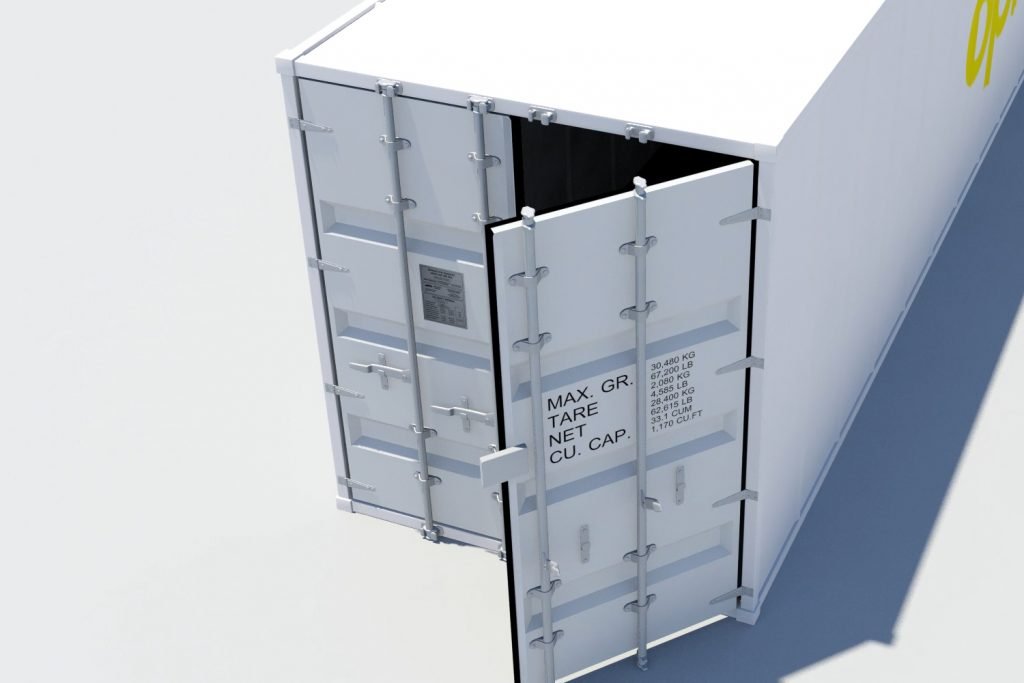
Shipping container doors are not typical doors and there are 4-5 hinges per door. The hinge pins must be lined up correctly for the doors to be free to fully open and close.Why are the Doors of My Shipping Container Difficult to Open/Close?
Here are some likely reasons a shipping container door will not open or close. Our hand leverage tool / shipping container door extension handle helps to address these issues.
- Rust and Corrosion: The hinge pins and blade are seized due to corrosion. As shipping containers navigate through diverse weather conditions and environments over time, they become susceptible to rust and corrosion. These corrosive agents can target the locking mechanisms and hinges, ultimately impeding the smooth operation of the container's doors. This accumulation of rust and corrosion introduces a layer of complexity to unlocking and opening the container.
- Maintenance Neglect: Regular maintenance is pivotal to sustaining the functionality of shipping containers. The absence of consistent upkeep can lead to complications with the locking mechanisms, hinges, and seals. Without proper lubrication and care, these components might stiffen or become challenging to manipulate, thereby escalating the difficulty of opening the container.
- Physical Impact: The nature of shipping exposes containers to a barrage of wear and tear, stemming from transportation and handling activities. Consequently, the containers might acquire dents, twists, or misalignments. These physical distortions can hinder the proper alignment of the doors, rendering the opening process arduous.
- Uneven Placement: Placing a shipping container on uneven ground can disrupt its frame's equilibrium. This misalignment can extend to the doors, making them difficult to open or close. The uneven stance of the container introduces an extra layer of complexity when trying to access its interior. Doors and lock rods may warp or the container frame is racked so that the door gear will not operate correctly. This may be caused by cargo shifting during transit. Look at the container to make sure that the doors are aligned and level, both top, and bottom.
- Temperature Influences: Drastic temperature variations encountered during transportation can trigger material expansion and contraction. This phenomenon reverberates through the locking mechanisms and hinges, potentially impairing their normal operation. The impact of temperature fluctuations compounds the challenges associated with opening the container. Water has become trapped between frozen shipping container doors, particularly relevant to refrigerated cargoes, or containers with moisture-releasing cargoes in cold weather.
- Inadequate Tools: The task of opening a shipping container may necessitate specialized tools such as heavy-duty bolt cutters or unique locking mechanism tools. In the absence of these tools, the process can become considerably more demanding.
- Sealing Complexity: Some shipping containers employ adhesive materials or seals to ensure the contents remain shielded from environmental elements. Over time, these seals can harden and resist breaking. Consequently, accessing the container requires overcoming this intricate sealing mechanism.
- The door gasket has been damaged and is preventing opening. Door gaskets are designed to present two or more fins against the structure or adjacent door. These are generally flexible but when the gasket is damaged, they may become hard or blocked thus jamming the door closed, or preventing it from being closed.
- Security Enhancements: Certain shipping containers incorporate robust security features to discourage unauthorized access and potential theft. Although these features are indispensable for safeguarding the contents, they can inadvertently increase the intricacy of opening the container.
- The Covid economy had also released many shipping containers in the world which are now often reused and the issue of hard-to-open/close used shipping containers is now a more common issue than ever.
How to Open Shipping Container Doors
PRECAUTION: Use optional provided lanyard and attach to OPNBar hook ring. Secure lanyard around wrist as an added measure to prevent tool from slipping from hand. Use recommended quality gloves with grip when using OPNBar. Use a shipping container strap and wrap around lockrods to prevent items that may have shifted from falling out. Use caution using OPNBar for opening and closing shipping container door, and use of force is not recommended as this can bend shipping container door handles.
- Begin with the right door. Swivel the custom catches up, there’s one on each handle.
- You’ll notice that your container is fitted with lock rods that run all the way from the bottom of the doors through to the top. At each end of the lock rod is a cam and a keeper which engage to allow the door to lock.
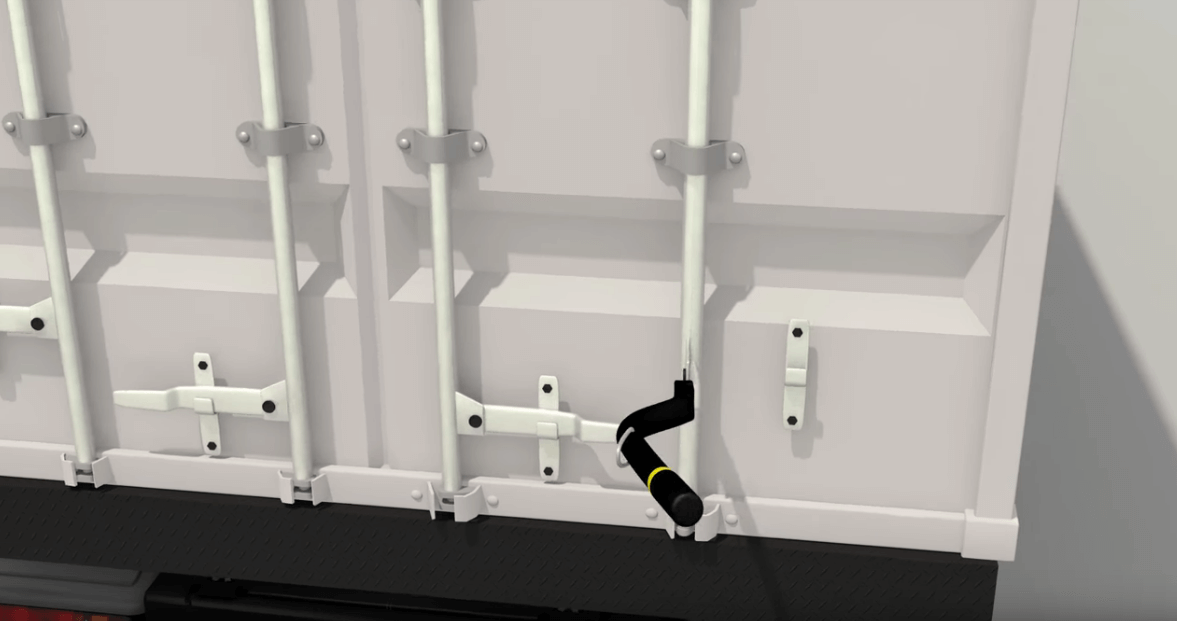
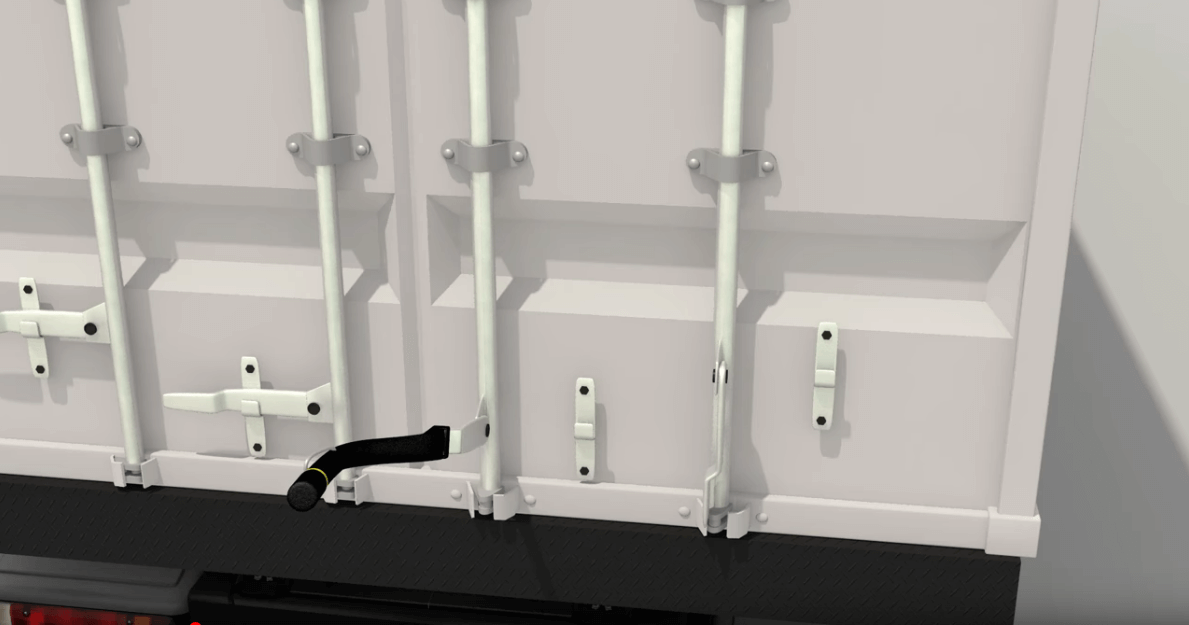
- Slide the OPNBar (hook side) over the door handle and grip the extended leverage handle with both hands. When using leverage bar, make sure the rectangular mouth of the bar is snug on the container door handle. For best results firmly insert OPNBar and apply forward pressure when operating. OPNBar should be tight and should not wobble. Failure to do so can result in the tool, or the operator to slip resulting in injury. The tool must be operated by using 2 hands with a firm grip at all times to reduce the risk of injury; when using the tool the operator must have both feet planted firmly on the ground while wearing dry work gloves with the safety strap so the tool will not slip out of one’s hand.
Lift up the door handles while gripping OPNBar and twist slightly to make sure the cams and keepers are disengaged.
Next take hold of the inner door handle first and pull out slightly followed by the outer handle and then pull them in tandem.
-


For more information, click here
Please be sure to read OPNBar Extended Instructions & Precautions
How to Close Shipping Container Doors
Closing the doors is just a reverse process of course, start with the left-hand door, engage the cams and keepers, and then twist both door handles. Slide the OPNBar (hook side) over the door handle to provide leverage.
When using leverage bar, make sure the rectangular mouth of the bar is snug on the container door handle. For best result, we recommend firmly inserting opnbar and applying forward pressure when operating. Bar should be tight and should not wobble. Failure to do so can result in the tool, or the operator to slip resulting in injury. It is recommended that the tool be operated by using two hands with a firm grip at all times to reduce the risk of potential injury.
Finally swivel the custom down.
How to Open & Close Difficult Shipping Container Doors
Closing hard-to-close shipping containers can be a challenging task, but with the right techniques and equipment, it can become more manageable. Here are some tips to help you close those stubborn containers:
Inspect the Container: Before attempting to close the container, inspect it for any visible damage or obstructions that might be hindering the closing process. Ensure there are no dents, protruding objects, or debris inside the container that could obstruct the doors.
Proper Positioning: Make sure the container is on a level surface to ensure the doors align correctly. If the ground is uneven, use leveling blocks or shims to create a stable foundation.
Grease the Hinges and Locking Mechanism: Apply lubricant to the hinges, locking bars, and cam keepers. This will reduce friction and make it easier to move the locking components into place.
Use OPNBar Leverage Bar: If you’re having trouble with the locking bars, use a long steel bar or pry bar to help apply additional force. Insert the bar into the locking mechanism and use it as leverage to push or pull the bars into position.
This hand leverage tool / shipping container door extension handle uses the principles of leverage to do the difficult work. By providing an extended area on which to grasp, with both hands, a more stable platform to manipulate the latch handle is achieved.
Designed to fit and extend the door latch handles on side-by-side doors found on the following units with the safety of the truck driver, operator, and worker foremost in mind:
- Standard Shipping Containers
- Conex Boxes
- Intermodal Containers
- ISO Containers
- Reefer Containers
- Military Containers
- Waste Management Containers
- Dismountable Shipping Cargo Containers
- Refrigerated Shipping Cargo Containers
- Semitrailer Dry Freight Cargo Vans
- Semitrailer Refrigerated Freight Cargo Vans
This intermodal container (also known as ISO Container, Conex Box, or Railroad Container) cargo inspection tool hand leverage tool / shipping container door extension handle is to aid in opening and closing side-by-side doors found within Dismountable Shipping Cargo Container Trailer Transportation Industries (Railroad, Harbor, and Trucking Industries).
Eliminates the Need for a crescent wrench, screwdriver, hammer, and crowbar which are commonly needed/used to open stuck shipping container doors.
Teamwork: Enlist the help of a colleague or co-worker. Having an extra pair of hands can be extremely beneficial, especially when dealing with heavy or misaligned doors.
Adjust the Door Alignment: If the doors are misaligned, use a forklift or a container-specific alignment tool to adjust them. Ensure that the locking bars align with the cam keepers correctly.
Check for Overloaded Containers: Overloaded containers can be difficult to close due to excess pressure on the sides. Ensure that the cargo inside the container is properly distributed and not pushing against the doors.
Inspect the Locking Components: Examine the locking bars, cams, and keepers for any damage or wear. If any components are damaged, they should be replaced before closing the container.
Maintenance and Repairs: Regularly maintain and inspect the containers and their locking mechanisms. Address any issues promptly to prevent them from becoming harder to close over time.
Use a Locking Bar Tool: Some containers come equipped with locking bar tools designed to help secure the doors more easily. These tools can provide extra leverage and make the process less physically demanding.
Safety First: Always prioritize safety when working with shipping containers. Use appropriate personal protective equipment, and be cautious of your surroundings and any potential hazards.
Seek Professional Help: If you’ve exhausted all options and still can’t close the container, consider contacting a professional container repair service or the container owner for assistance.
Remember that closing a shipping container should never be forced to the point of damaging the container or compromising safety. If you encounter extreme difficulties, it’s essential to seek expert assistance to prevent accidents and ensure the container’s integrity.
Injuries from Opening/Closing Hard-to-Open/Close Shipping Container Doors
On a freezing morning, when ice has seized a car door shut, one would never consider using a crowbar to open a car door. The same thing goes for shipping containers. While conditions may be more extreme in container operations, is it reasonable to use that kind of force to open or close container doors? Experience suggests that it is not, and often ends with someone being hurt.
 Injuries to personnel involved with container door opening and closing are increasing, and often it is as a result of an inappropriate technique that is being employed. We might expect container doors to open and close as if they were car doors, without understanding why this might not be the case.
Starting with the structure of container doors, most will have four or five hinges per door. The mechanics at the point of manufacture is that the hinge pins must be all aligned on the same plane (vertical and horizontal) and in line. Offset hinge pins will result in the blade binding when it is rotated about the pin – the more the misalignment, the greater resistance will be encountered during operation. At the time of manufacture, therefore, it might be expected that the hinge pins on every door are aligned and free to fully open (270º of operation).
 Let’s assume that the container is presented in pristine or well-maintained condition; why might the door not open with ease? Containers are generally either on a trailer/chassis or on the ground, and in both cases, the position of the locking gear handles are at an inconvenient height. For best results, the handles should be directly in front of you and at a height that is above the waist and below the shoulders.
The technique is all-important. Start with the two lock rods on the right-hand door, lift the handles out of the retainers and rotate them together as far as they will go. This should be more than 90º and rotation beyond 90º often initiates the container door opening process by forcing the cams out of their keepers. Then grasp the vertical locking bars, one in each hand, so that your hands are just below shoulder height and pull back with your body, using your leg muscles rather than your back.
If the door is still stuck, unless specifically advised against doing so (ie. the container is carrying a flexitank or bulk cargo), open the locking bars on the left-hand door and then grasp the inner locking rod of both doors and pull back, again using your body not your back. If the door still will not open, ask a colleague to pull on one door while you pull on the other.
Injuries almost always occur at the point frustration takes over and mechanical means are employed – the crowbar or a fork truck. So why will the door not open? Generally, this can be attributed to one of four reasons:
- The container frame is racked so that the door gear will not operate correctly. This may be caused by cargo shifting during transit. Look at the container to make sure that the doors are aligned and level, both top, and bottom.
- The hinge pins and blade are seized due to corrosion.
- The door gasket has been damaged and is preventing container door opening. Door gaskets are designed to present two or more fins against the structure or adjacent door. These are generally flexible but when the gasket is damaged, they may become hard or blocked thus jamming the door closed, or preventing it being closed.
- Water has become trapped between the doors and frozen, particularly relevant to refrigerated cargoes, or containers with moisture-releasing cargoes in cold weather.
 Doors that open but are stiff to move may suffer from the first two reasons above, along with possible misaligned hinge pins. Pins can become misaligned by damage to the ‘J-bar’ which has twisted one or more pins, or a hinge blade or pin has incorrectly aligned the blade with the hinges on the door. Adding a backing plate under a single hinge blade may help take the blades out of alignment. When a hinge blade needs to be refitted because of damage or corrosion and a doubler plate is required, plates should be inserted under all the blades on that door.
The safe operation of doors requires that some attention be given to them. Many hinges have coatings on the inner surface of the hinge blade, while others use plastic liners, both of which are designed to protect against corrosion. Some designs are fitted with greasing apertures. Fundamental to success are the examination and maintenance processes.
Typically, doors will be opened for in-service inspections and off-hires. Where oil does not free the hinges, repair work is probably necessary. An inspection is required to check that the hinges and hinge pin welds are not broken or cracked. Opening doors could be done when a depot releases a unit for packing, since it may have been in the stack for a prolonged period.
 If the doors cannot be opened to pack a container, send the unit back! If it is already packed and you need to open the doors, but they will not open by hand, try to pull both doors open at the same time with increasing power. If you need more than two people, ensure you tell the container operator, especially if, as a result of container door opening, the locking gear or doors are or become damaged.
And, when you are opening a packed container, remember to watch out for those packages that are just about to fall out. In all these matters, be alert that the doors are big and heavy – treat them with respect and report anything unusual.
Source: TT Club
Equip operators with the proper tools needed and promote safety to help them avoid injury.
The OPNBar tool, for instance, can help avoid some injuries by providing an ergonomic means of opening shipping containers, checking for low-pressure tires, and aiding operators in releasing the tractor from the trailer. Please be sure to read OPNBar Extended Instructions & Precautions Safer Grip by OPNBar™️ are ideal work gloves for all-day use for light manufacturing, warehouse operators, and for use in maintenance areas. Safer Grip gloves by OPNBar are ideal multi-purpose work gloves for various applications like trucking and delivery, warehouses, maintenance areas, light manufacturing, and carpentry. They are also great for gardening, and various outdoor activities that require grip in wet conditions, like boating, fishing, hiking, and biking, and can help protect hands while providing extra grip when handling tools and materials.Related: Injuries from Opening/Closing Hard to Open/Close Shipping Container Doors
Frequently Asked Questions
Why is my shipping container door so hard to open?
Common causes include rust and corrosion, binding hinges, misaligned locking rods, sticky door seals, uneven container support, frame racking and shifted cargo. Determine where the resistance is occurring before applying additional force.
How do you open a stuck shipping container door?
First inspect the locking mechanism, hinges, door gasket and container alignment. Make sure there isn’t cargo pressing against the doors. If the hardware is functioning and the handle simply requires additional leverage, a purpose-built container door leverage tool can assist with controlled operation.
Can an uneven container make the doors hard to open?
Yes. Uneven support can rack or twist a container frame enough to affect door alignment and make the locking hardware difficult to operate.
Why won’t my shipping container locking bars turn?
Corrosion, damaged components, misaligned cams and keepers, bent rods or frame distortion can increase resistance. Inspect the mechanism rather than assuming additional force is the solution.
What is a shipping container door leverage tool?
It’s a tool that extends the effective length of the container-door handle, providing additional mechanical advantage. OPNBar is designed for this application and fits over compatible container handles according to its operating instructions.
Can OPNBar open rusted shipping container doors?
OPNBar can provide additional controlled leverage when operating compatible hard-to-move container handles. However, severely seized, damaged, distorted or unsafe equipment should be inspected rather than simply forced.
What should I do if cargo is pushing against the container doors?
Stop. Don’t attempt to overpower a door that’s under pressure from shifted cargo. Secure the area and follow your organization’s procedures for handling shifted loads.
Republished by Blog Post Promoter