Railroad Container
Opening and Closing Tool
SCS International is now an affiliate reseller of railroad shipping containers/conex boxes and parts! For more information, please contact us.
A Railroad Container (also known as Intermodal Container, ISO Container, Conex Box, and certain Truck Trailers), is a large standardized shipping container, designed and built for intermodal freight transport. Railroad Containers can be used across different modes of transport. They can go from ship to rail to truck, without unloading and reloading their cargo.

This industry term refers to the International Standards Organization (ISO), the largest developer of international standards and the organization that developed the standard dimension specifications (commonly 10 feet, 20 feet, 40 feet) for steel shipping containers used worldwide.
The metal doors on the shipping containers on containers are standardized. Railroad Containers use the same type and style of doors and locking bars, which our tool can be used.
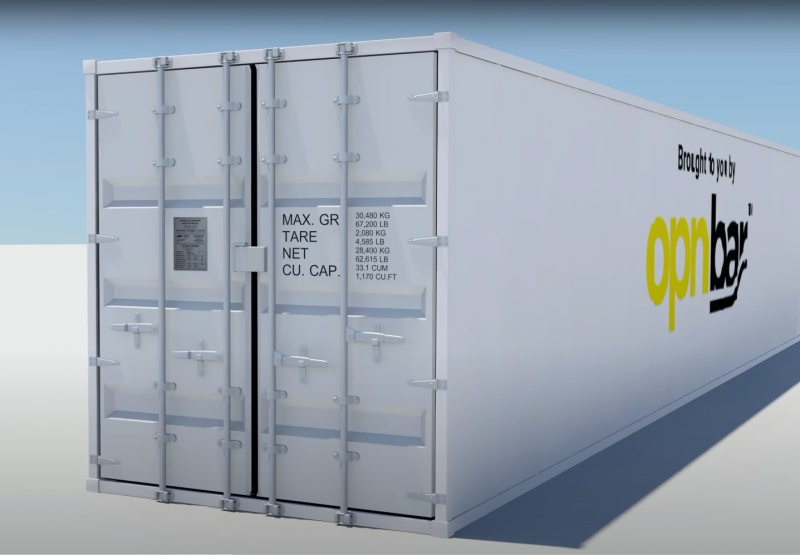
Lengths are as follows: 20′, 40′, 45′, 48′, 50′, 53′. All these containers are globally used to transport cargo. The 53′ length is now, the new standard length.
Here are some likely reasons a Railroad shipping container door will not open or close. Our hand leverage tool / shipping container door extension handle helps to address these issues.
- Rust and Corrosion: The hinge pins and blade are seized due to corrosion. As shipping containers navigate through diverse weather conditions and environments over time, they become susceptible to rust and corrosion. These corrosive agents can target the locking mechanisms and hinges, ultimately impeding the smooth operation of the container's doors. This accumulation of rust and corrosion introduces a layer of complexity to unlocking and opening the container.
- Maintenance Neglect: Regular maintenance is pivotal to sustaining the functionality of shipping containers. The absence of consistent upkeep can lead to complications with the locking mechanisms, hinges, and seals. Without proper lubrication and care, these components might stiffen or become challenging to manipulate, thereby escalating the difficulty of opening the container.
- Physical Impact: The nature of shipping exposes containers to a barrage of wear and tear, stemming from transportation and handling activities. Consequently, the containers might acquire dents, twists, or misalignments. These physical distortions can hinder the proper alignment of the doors, rendering the opening process arduous.
- Uneven Placement: Placing a shipping container on uneven ground can disrupt its frame's equilibrium. This misalignment can extend to the doors, making them difficult to open or close. The uneven stance of the container introduces an extra layer of complexity when trying to access its interior. Doors and lock rods may warp or the container frame is racked so that the door gear will not operate correctly. This may be caused by cargo shifting during transit. Look at the container to make sure that the doors are aligned and level, both top, and bottom.
- Temperature Influences: Drastic temperature variations encountered during transportation can trigger material expansion and contraction. This phenomenon reverberates through the locking mechanisms and hinges, potentially impairing their normal operation. The impact of temperature fluctuations compounds the challenges associated with opening the container. Water has become trapped between frozen shipping container doors, particularly relevant to refrigerated cargoes, or containers with moisture-releasing cargoes in cold weather.
- Inadequate Tools: The task of opening a shipping container may necessitate specialized tools such as heavy-duty bolt cutters or unique locking mechanism tools. In the absence of these tools, the process can become considerably more demanding.
- Sealing Complexity: Some shipping containers employ adhesive materials or seals to ensure the contents remain shielded from environmental elements. Over time, these seals can harden and resist breaking. Consequently, accessing the container requires overcoming this intricate sealing mechanism.
- The door gasket has been damaged and is preventing opening. Door gaskets are designed to present two or more fins against the structure or adjacent door. These are generally flexible but when the gasket is damaged, they may become hard or blocked thus jamming the door closed, or preventing it from being closed.
- Security Enhancements: Certain shipping containers incorporate robust security features to discourage unauthorized access and potential theft. Although these features are indispensable for safeguarding the contents, they can inadvertently increase the intricacy of opening the container.
- The Covid economy had also released many shipping containers in the world which are now often reused and the issue of hard-to-open/close used shipping containers is now a more common issue than ever.
Injuries from Opening/Closing Hard-to-Open/Close Shipping Container Doors
On a freezing morning, when ice has seized a car door shut, one would never consider using a crowbar to open a car door. The same thing goes for shipping containers. While conditions may be more extreme in container operations, is it reasonable to use that kind of force to open or close container doors? Experience suggests that it is not, and often ends with someone being hurt.
 Injuries to personnel involved with container door opening and closing are increasing, and often it is as a result of an inappropriate technique that is being employed. We might expect container doors to open and close as if they were car doors, without understanding why this might not be the case.
Starting with the structure of container doors, most will have four or five hinges per door. The mechanics at the point of manufacture is that the hinge pins must be all aligned on the same plane (vertical and horizontal) and in line. Offset hinge pins will result in the blade binding when it is rotated about the pin – the more the misalignment, the greater resistance will be encountered during operation. At the time of manufacture, therefore, it might be expected that the hinge pins on every door are aligned and free to fully open (270º of operation).
 Let’s assume that the container is presented in pristine or well-maintained condition; why might the door not open with ease? Containers are generally either on a trailer/chassis or on the ground, and in both cases, the position of the locking gear handles is at an inconvenient height. For best results, the handles should be directly in front of you and at a height that is above the waist and below the shoulders.
The technique is all-important. Start with the two lock rods on the right-hand door, lift the handles out of the retainers and rotate them together as far as they will go. This should be more than 90º and rotation beyond 90º often initiates the container door opening process by forcing the cams out of their keepers. Then grasp the vertical locking bars, one in each hand, so that your hands are just below shoulder height and pull back with your body, using your leg muscles rather than your back.
If the door is still stuck, unless specifically advised against doing so (ie. the container is carrying a flexitank or bulk cargo), open the locking bars on the left-hand door and then grasp the inner locking rod of both doors and pull back, again using your body not your back. If the door still will not open, ask a colleague to pull on one door while you pull on the other.
Injuries almost always occur at the point frustration takes over and mechanical means are employed – the crowbar or a fork truck. So why will the door not open? Generally, this can be attributed to one of four reasons:
- The container frame is racked so that the door gear will not operate correctly. This may be caused by cargo shifting during transit. Look at the container to make sure that the doors are aligned and level, both top, and bottom.
- The hinge pins and blade are seized due to corrosion.
- The door gasket has been damaged and is preventing container door opening. Door gaskets are designed to present two or more fins against the structure or adjacent door. These are generally flexible but when the gasket is damaged, they may become hard or blocked thus jamming the door closed, or preventing it from being closed.
- Water has become trapped between the doors and frozen, particularly relevant to refrigerated cargoes, or containers with moisture-releasing cargoes in cold weather.
 Doors that open but are stiff to move may suffer from the first two reasons above, along with possible misaligned hinge pins. Pins can become misaligned by damage to the ‘J-bar’ which has twisted one or more pins, or a hinge blade or pin has incorrectly aligned the blade with the hinges on the door. Adding a backing plate under a single hinge blade may help take the blades out of alignment. When a hinge blade needs to be refitted because of damage or corrosion and a doubler plate is required, plates should be inserted under all the blades on that door.
The safe operation of doors requires that some attention be given to them. Many hinges have coatings to the inner surface of the hinge blade, others use plastic liners, both of which are designed to protect against corrosion. Some designs are fitted with greasing apertures. Fundamental to success is the examination and maintenance processes.
Typically, doors will be opened for in-service inspections and off-hires. Where oil does not free the hinges, repair work is probably necessary. An inspection is required to check that the hinges and hinge pin welds are not broken or cracked. Opening doors could be done when a depot releases a unit for packing, since it may have been in the stack for a prolonged period.
 If the doors cannot be opened to pack a container, send the unit back! If it is already packed and you need to open the doors, but they will not open by hand, try to pull both doors open at the same time with increasing power. If you need more than two people, ensure you tell the container operator, especially if, as a result of container door opening, the locking gear or doors are or become damaged.
And, when you are opening a packed container, remember to watch out for those packages that are just about to fall out. In all these matters, be alert that the doors are big and heavy – treat them with respect and report anything unusual.
Source: TT Club
Equip operators with the proper tools needed and promote safety to help them avoid injury.
The OPNBar tool, for instance, can help avoid some injuries by providing an ergonomic means of opening shipping containers, checking for low-pressure tires, and aiding operators in releasing the tractor from the trailer. Please be sure to read OPNBar Extended Instructions & Precautions Safer Grip by OPNBar™️ are ideal work gloves for all-day use for light manufacturing, warehouse operators, and for use in maintenance areas. Safer Grip gloves by OPNBar are ideal multi-purpose work gloves for various applications like trucking and delivery, warehouses, maintenance areas, light manufacturing, and carpentry. They are also great for gardening, and various outdoor activities that require grip in wet conditions, like boating, fishing, hiking, and biking, and can help protect hands while providing extra grip when handling tools and materials.Related: Injuries from Opening/Closing Hard to Open/Close Shipping Container Doors
How to Use OPNBar Tool – Overhead Container Handle Leverage Bar
Available here:
About OPNBar Overhead Container Handle Leverage Bar – Safely Reach & Turn High Shipping Container Door Handles
Overhead handles are commonly used throughout the trucking, warehouse, railroad, and industrial sectors—but reaching and operating them can be difficult, uncomfortable, and potentially unsafe.
The new **OPNBar Overhead Reach Tool** is designed to help operators reach elevated handles while still providing the leverage, control, and ergonomic support needed to operate them more effectively.

Its extended design allows users to access overhead handles from the ground or from work platforms where additional reach is required. Instead of overextending, climbing unnecessarily, or relying on improvised tools, operators can use the OPNBar to engage the handle from a more stable and comfortable position.
The tool is designed to twist and rotate, allowing the head to accommodate handles positioned in either left- or right-facing orientations. This added flexibility makes it suitable for a wide variety of handle configurations and working environments.

Despite its extended reach and durable construction, the tool remains lightweight at only **four pounds**, making it easier to carry, position, and use throughout the workday.
The extension bar is available in multiple lengths and can also be customized upon request to meet specific reach or operational requirements.

The interchangeable head is available in two different designs, with custom head configurations also available for specialized applications.

Whether it is used in trucking operations, warehouses, railroad facilities, loading areas, or elevated work platforms, the new OPNBar Overhead Reach Tool provides a safer, more ergonomic way to reach, engage, and operate overhead handles.
Safety Precautions
If your OPNBar was not purchased from an approved distributor or seller, we are unable to ensure reliability and safety. It is advised to only purchase from an approved distributor or seller as found on our contact us page. For questions about approved sellers, you can contact us.
Always use safety precautions in the workplace. This tool is a manual tool, so caution must still be taken when opening or closing doors. For aging OPNBars, please always inspect your tool that there are no compromised or broken parts of the tool. If you notice such issues, please discontinue use. Please watch this safety video as part of our instructions prior to using OPNBar.
Disclaimer & Precautions for Using OPNBar as a Cheater Bar
Disclaimer:
The OPNBar is designed to provide additional leverage for opening container latches and other approved applications. Using the OPNBar as a cheater bar for unintended purposes, such as extending the length of a wrench or other tools, may result in injury, equipment damage, or failure. Always follow the manufacturer’s guidelines and proper usage instructions. The user assumes all risks associated with improper use of the product. The manufacturer and distributors of OPNBar are not liable for any damage, injury, or loss caused by misuse.
Precautions for Safe Use:
- Use as Intended – OPNBar is engineered for leverage assistance in opening latches and similar applications. Do not use it as a pipe extension for wrenches or tools not designed for such force.
- Inspect Before Use – Always check for signs of wear, cracks, or damage before using the OPNBar. A compromised tool may fail under pressure.
- Wear Proper Safety Gear – Use gloves, eye protection, and proper footwear to prevent hand injuries and ensure safe handling.
- Ensure Secure Positioning – When applying force, ensure the OPNBar is securely attached to the intended surface or tool to prevent slipping or sudden release.
- Do Not Exceed Safe Force Limits – Excessive force can cause equipment failure, structural damage, or personal injury.
The intention of this tool is mainly to provide leverage and to prevent unconventional methods of opening/closing container doors which often result in strains and sprains. Use quality gloves with grip when using OPNBar. Use a shipping container strap and wrap around lockrods to prevent items that may have shifted from falling out. Use caution using OPNBar for opening and closing shipping container door, and use of force is not recommended as this can bend shipping container door handles.
Large Mouth versions of OPNBar may not include the built-in 5th wheel release hook. If you are interested in the 5th wheel hook, an extension piece may be available.
As a tire thumper, while tire thumping is a quick way to check for flat tires, you must always check with a tire gauge if you suspect that a tire is low on air. While some customers also use OPNBar as an alternative tool for various uses, always use caution.
Using product other than it’s intended function may result in injury and is at your own risk.
Please also refer to our Company Disclaimer.
Life Expectancy of Tool
For aging OPNBars, please always inspect your tool that there are no compromised or broken parts of the tool. If you notice such issues, please discontinue use. If any parts of the tool show cracks, deterioration, or wear and tear, the integrity of the tool could be compromised.
Leverage Bar
PRECAUTION: Use optional provided lanyard and attach to OPNBar hook ring. Secure lanyard around wrist as an added measure to prevent tool from slipping from hand. Use recommended quality gloves with grip when using OPNBar. Use a shipping container strap and wrap around lockrods to prevent items that may have shifted from falling out. Use caution using OPNBar for opening and closing shipping container door, and use of force is not recommended as this can bend shipping container door handles.

Note: If you encounter issues with the bend of our tool, please contact us for our new bend replacement
OPNBar Overhead Reach Tool – Left/Right Handle Adjustment
Orienting the OPNBar for Left or Right Container Handles
- Press and hold the center adjustment button located in the middle of the OPNBar Overhead Reach Tool.

- While holding the button, rotate the OPNBar head to the desired orientation for the left or right shipping container door handle.

- Release the button when the OPNBar is properly positioned.
- Make sure the head locks securely into place before engaging the container handle.
- Position the OPNBar onto the elevated container handle and operate the tool as intended.

IMPORTANT: Always verify that the rotating head is fully locked before applying leverage. Do not use the tool if the head is not securely locked.
Opening
The right hand door is the first door you open, swivel the custom catches up, there’s one on each handle.
You’ll notice that your container is fitted with lock rods which run all the way from the bottom of the doors through to the top. At each end of the lock rod is a cam and a keeper which engage to allow the door to lock.
Slide the OPNBar (hook side) over the door handle completely and grip the extended leverage handle with both hands.
When using leverage bar, make sure the rectangular mouth of the bar is snug on the container door handle. For best results firmly insert OPNBar and apply forward pressure when operating. OPNBar should be tight and should not wobble. Failure to do so can result in the tool, or the operator to slip resulting in injury. The tool must be operated by using 2 hands with a firm grip at all times to reduce the risk of injury; when using the tool the operator must have both feet planted firmly on the ground while wearing dry work gloves with the safety strap so the tool will not slip out of one’s hand.


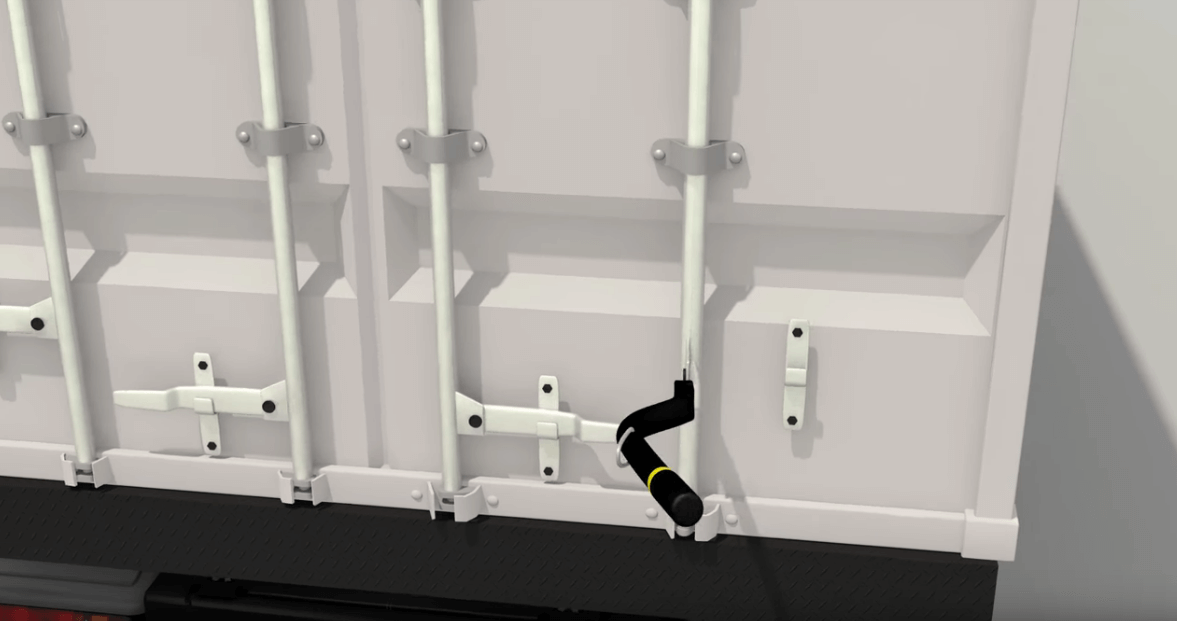
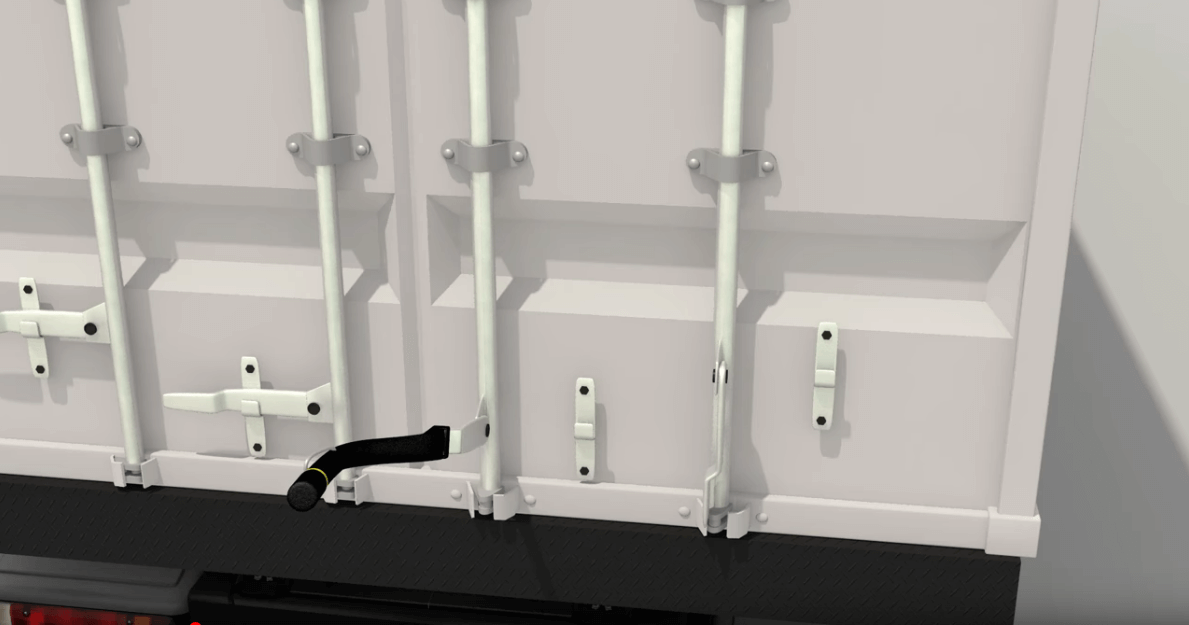
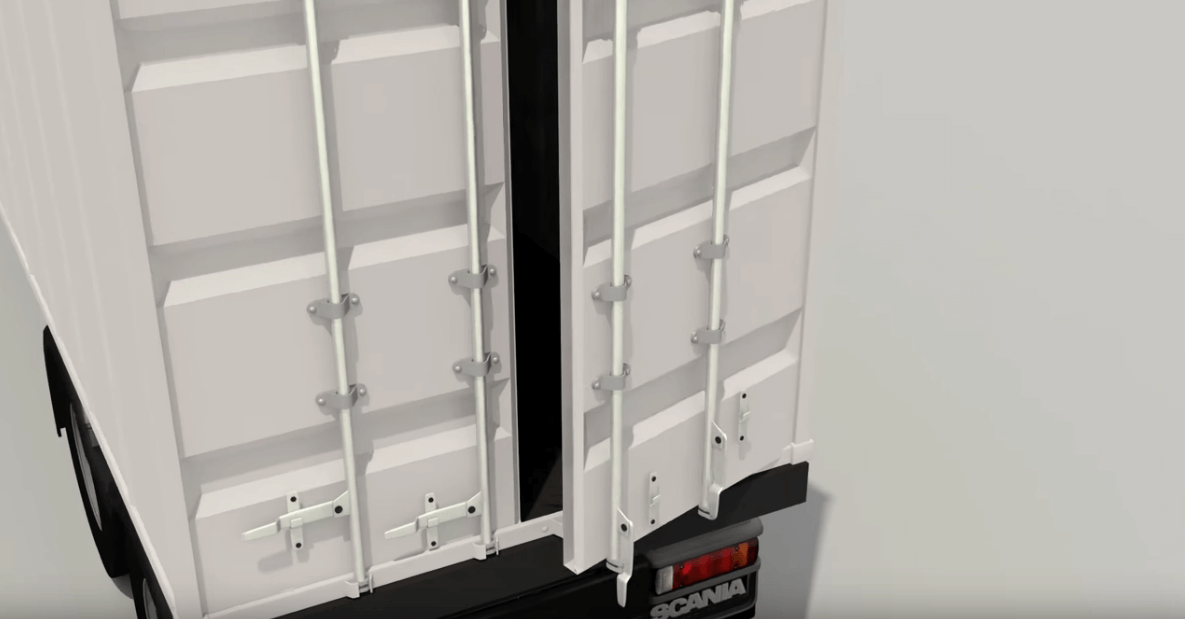
Lift up the door handles while gripping OPNBar and twist slightly to make sure the cams and keepers are disengaged.
Next take hold of the inner door handle first and pull out slightly followed by the outer handle and then pull them in tandem.
For more information, click here
Closing
Closing the doors is just a reverse process of course, start with the left hand door, engage the cams and keepers and then twist both door handles. Slide the OPNBar (hook side) over the door handle to provide leverage.
When using leverage bar, make sure the rectangular mouth of the bar is snug on the container door handle. For best result we recommend firmly inserting opnbar and applying forward pressure when operating. Bar should be tight and should not wobble. Failure to do so can result in the tool, or the operator to slip resulting in injury. It is recommended that the tool be operated by using two hands with a firm grip at all times to reduce the risk of potential injury.
Finally swivel the custom down.
For more information, click here
Cheater Bar
A cheater bar, also known as a “pipe extender”, “breaker bar extension,” or torque bar, is a simple and cost-effective tool used to increase the leverage and torque applied to a wrench or socket handle. It consists of a sturdy, elongated pipe or rod that fits over the handle of your existing tool, effectively extending its length. By doing so, it multiplies the torque you can apply to stubborn nuts, bolts, or fasteners, making seemingly impossible tasks more manageable.

Breaker Bar/Cheater Bar/Torque Bar – Wrench – OPNBar Version 4 – Patent Info
The Anatomy of a Cheater Bar
Cheater bars are minimalistic in design, comprising just two main components:
Extension Pipe or Rod: The primary component of a cheater bar is the extension itself, typically made of metal, most commonly steel. Its length can vary significantly, with options ranging from a foot to several feet, depending on the user’s requirements and the desired level of leverage.

Breaker Bar/Cheater Bar/Torque Bar – Pipe Wrench – OPNBar Version 4
Socket Head or End Cap: One end of the extension features a socket head or end cap that fits over the wrench or socket handle. This socket head securely holds your tool in place, ensuring a solid connection between the cheater bar and the tool it augments.

Breaker Bar/Cheater Bar/Torque Bar – Socket Wrench – OPNBar Version 4
Applications of Cheater Bars
Cheater bars find applications across various industries and scenarios, including:
Automotive Repairs: When it comes to loosening lug nuts or suspension components torqued to high specifications, cheater bars can be a mechanic’s best friend, saving time and effort.

Breaker Bar/Cheater Bar/Torque Bar – Automotive – OPNBar Version 4
Plumbing: In plumbing, especially for larger pipe fittings or stubborn valves, cheater bars can make turning wrenches or pipe wrenches more manageable.

Breaker Bar/Cheater Bar/Torque Bar – Pipe Wrench – OPNBar Version 4
Construction: Builders and contractors often use cheater bars to deal with tight and resistant bolts and nuts in structural elements and machinery.
Heavy Equipment Maintenance: In industrial settings, cheater bars come in handy for maintaining heavy machinery, where enormous torque is required.
Tire Thumper
While tire thumping is a quick way to check for flat tires, you must always check with a tire gauge if you suspect that a tire is low on air. The apparatus must be used as a tool to detect changes in sound when thumping tires to quickly point out if there is an issue with a tire. Use quality gloves with grip when using OPNBar.


A quick and easy way to check tire pressure is by thumping your tires. Some trucks have many tires and tire thumping is the fastest method for checking tire pressure before hitting the road.
Since dual tires ride side by side, one tire can be flat and still on the wheel or rim and will not appear flat since the tire right next to it will hold it off the ground.
Tire Thumper assists the truck driver and operator in a quick method of evaluating properly inflated tires.
If there is air in the tire, the tire thumper will bounce easily and make a loud, sharp thud; and if the tire is flat (no air) it will not bounce much and will give a sound like a dull thud when it is smacked.
For more information, click here
Container Seal Breaker
OPNBar also acts as a Shipping Container Seal Breaker, for plastic and metal, which can eliminate the need for wire cutters when on the go.
This product should be stowed in a secure area, away from children and should not be exposed to excess heat or frigidity which may affect the durability of the product.
Additional Precautions
- When using the tool the operator must have both feet firmly planted on a level surface at all times.
- We recommend that before the tool is used, the operator wears clean, dry, “work gloves” free of any dirt or grease or any other substance to avoid slippage from the operator's hands.
- When not is use, product must be stowed away in a secure area
- Avoid exposing the tool to heat or frigid conditions for long periods of time as this may affect the durability of the product when in use
- Ensure tools properly seated before use to avoid injury
- Safety strap can be used reduce the likelihood of tool slipping out of hand
- Use quality gloves with grip when using OPNBar.
More Precautions
Taking precautions when opening and closing shipping container doors is crucial to ensure both personal safety and the integrity of the cargo. Here's a unique and unplagiarized version of the precautions to follow:
- Assess Surroundings: Begin by surveying the area around the container. Look for any potential hazards, uneven ground, or obstacles that might hinder the smooth operation of the doors or pose a safety risk.
- Protective Gear: Prioritize safety by donning appropriate personal protective equipment (PPE), such as sturdy gloves and durable footwear. These safeguards shield your hands and feet from potential sharp edges or unexpected movements.
- Inspect Locks and Seals: Before attempting to open the container doors, double-check that all locks, seals, and security measures are fully disengaged. Failing to do so might lead to unnecessary strain on the doors or compromise your safety.
- Use Correct Tools: If the doors are secured with locks, make use of the correct tools for their removal. Avoid resorting to makeshift tools or excessive force, as this could result in accidents or damage.
- Firm Footing: Maintain a stable footing while operating the doors. Refrain from climbing on the container or using unstable objects to gain height, as this can lead to dangerous falls.
- Mindful Effort: If the doors prove resistant to opening, refrain from exerting excessive force. Straining muscles or causing sudden door movements can result in injury. If necessary, seek assistance.
- Handle with Care: When operating the doors, ensure you have a secure grip on the handles or edges. Abrupt door movement due to a loose grip can lead to unforeseen accidents.
- Watch for Falling Objects: As the doors are opened, be vigilant for any items that may have shifted during transit and could tumble out when the doors are ajar.
- Controlled Action: Both opening and closing the doors should be executed smoothly and steadily. Prevent rapid swinging or forceful closure, as these actions can lead to accidents or damage.
- Avoid Pinching: Be particularly cautious of pinch points where the doors meet the container frame. Steer clear of these areas to prevent potential injuries.
- Clear the Path: Before closing the doors, ensure that no objects or body parts are obstructing the path. Hasty door closure with obstructions in the way can result in harm.
- Secure Closure: After opening or closing the doors, verify that they are properly secured and latched. Loose doors can unexpectedly swing shut, posing a risk to those in proximity.
- Open Communication: When collaborating with a team, maintain clear communication regarding your actions and intentions while manipulating the container doors.
- Regular Maintenance: Ensure that the hinges, locks, and other components of the container are routinely inspected and adequately lubricated. This practice prevents operational glitches.
- Seek Expertise: If you're unfamiliar with container door operations, seek guidance or training from experienced professionals before attempting to manipulate them.